
Hey Media Planners,
Let's talk about something that's probably keeping you up at night: reaching Gen Z in authentic, measurable ways that actually move the needle for your clients.
I've spent the last few years watching Fortune 5000 brands throw money at esports and tech sponsorships, only to watch their campaigns fall flat with the exact audience they're trying to reach. The problem? Most media planners are making the same avoidable mistakes, and it's costing them credibility, budget, and results.
Here's the thing: Gen Z doesn't just consume technology differently than previous generations. They think about it differently. They understand cloud infrastructure, AI tools, and digital ecosystems in ways that fundamentally change how sponsorships need to work.
Let me break down the seven biggest mistakes I see, and more importantly, how to fix them.
Mistake #1: Treating Physical Infrastructure as an Afterthought
The Problem: Too many media planners focus exclusively on digital touchpoints while ignoring the physical spaces where Gen Z actually engages with technology.
Here's what most people miss: Gen Z students spend significant time in educational environments where they're actively learning about cloud computing, AI literacy, and simulation technology. When your brand shows up in these physical learning spaces, not just on their phones, you're associated with career preparation, not just entertainment.
The Fix: Invest in branded physical infrastructure that provides genuine educational value. Think beyond logos on jerseys. We're talking about high-spec simulation stations that teach cloud-based gaming infrastructure, AI-assisted competitive analysis, and the real tech stack that powers modern esports.
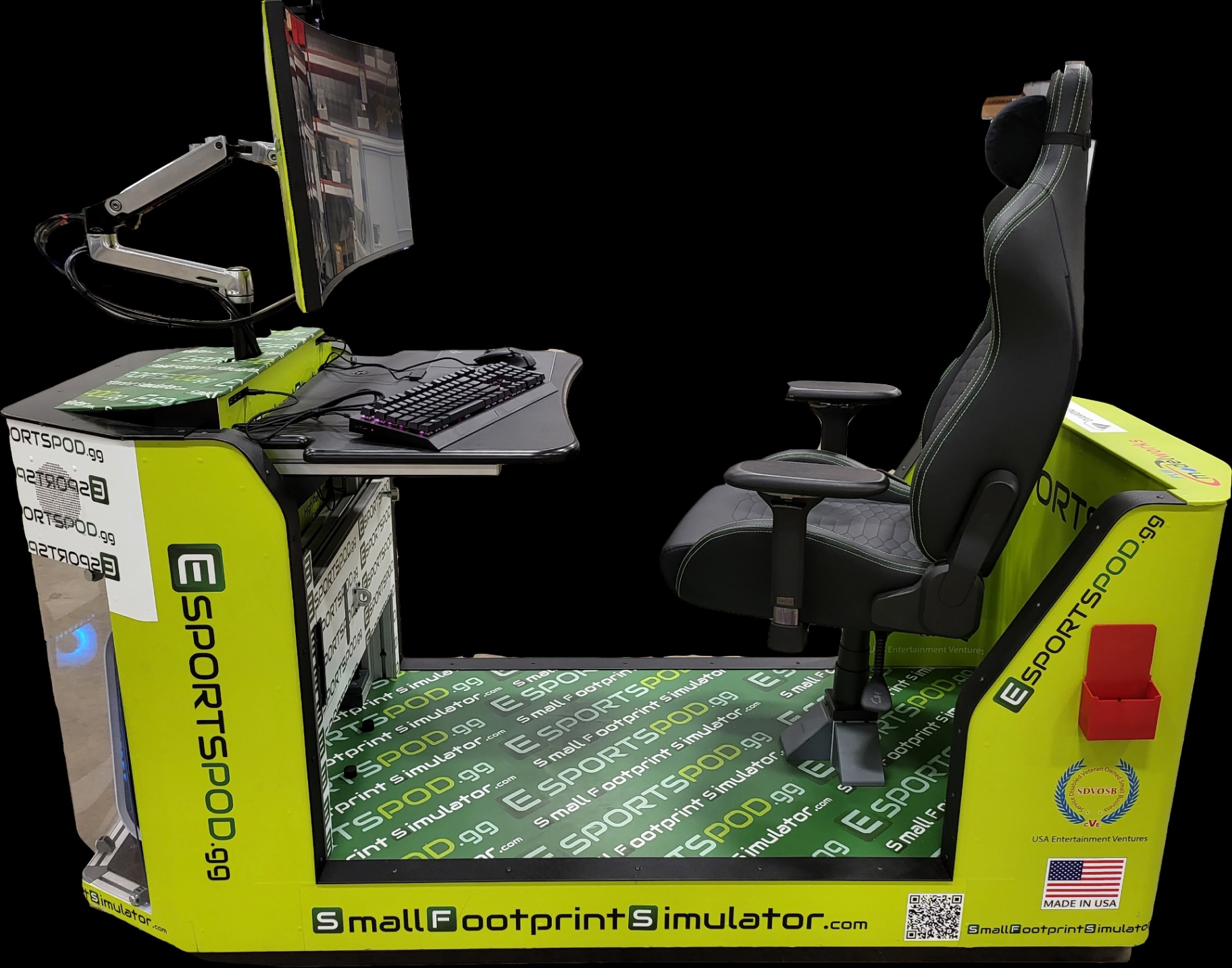
EsportsPods, for instance, create year-round brand presence in high schools through physical gaming and simulation infrastructure. Students interact with your brand daily while learning about the technology that powers competitive gaming, which increasingly means understanding cloud architecture, AI tools, and data analytics.
Mistake #2: Ignoring the Cloud/AI Literacy Gap
The Problem: Media planners assume Gen Z "gets tech" without recognizing the strategic opportunity in teaching them about enterprise-level technology.
Yes, Gen Z is digitally native. But there's a massive difference between using TikTok and understanding how cloud infrastructure, AI training models, or simulation platforms actually work at scale. This knowledge gap represents prime real estate for tech brands.
The Fix: Position your sponsorship as educational infrastructure, not just advertising. When Dell, Logitech, or Nvidia brand simulation pods in schools, they're not just getting logo placement: they're directly associating their brand with career-relevant technical literacy.
Students learn that competitive gaming runs on the same cloud infrastructure your B2B clients use. They discover that AI analysis tools work the same way in esports as in data science. Your brand becomes synonymous with professional competency, not just consumer products.
Mistake #3: Creating One-Size-Fits-All Activations
The Problem: Rolling out identical sponsorship packages across different schools, regions, and communities without customization.
Gen Z exists in highly specific, niche communities. What resonates with esports students in Colorado might completely miss the mark with simulation racing enthusiasts in Texas. Cookie-cutter approaches signal that you don't actually understand your audience.
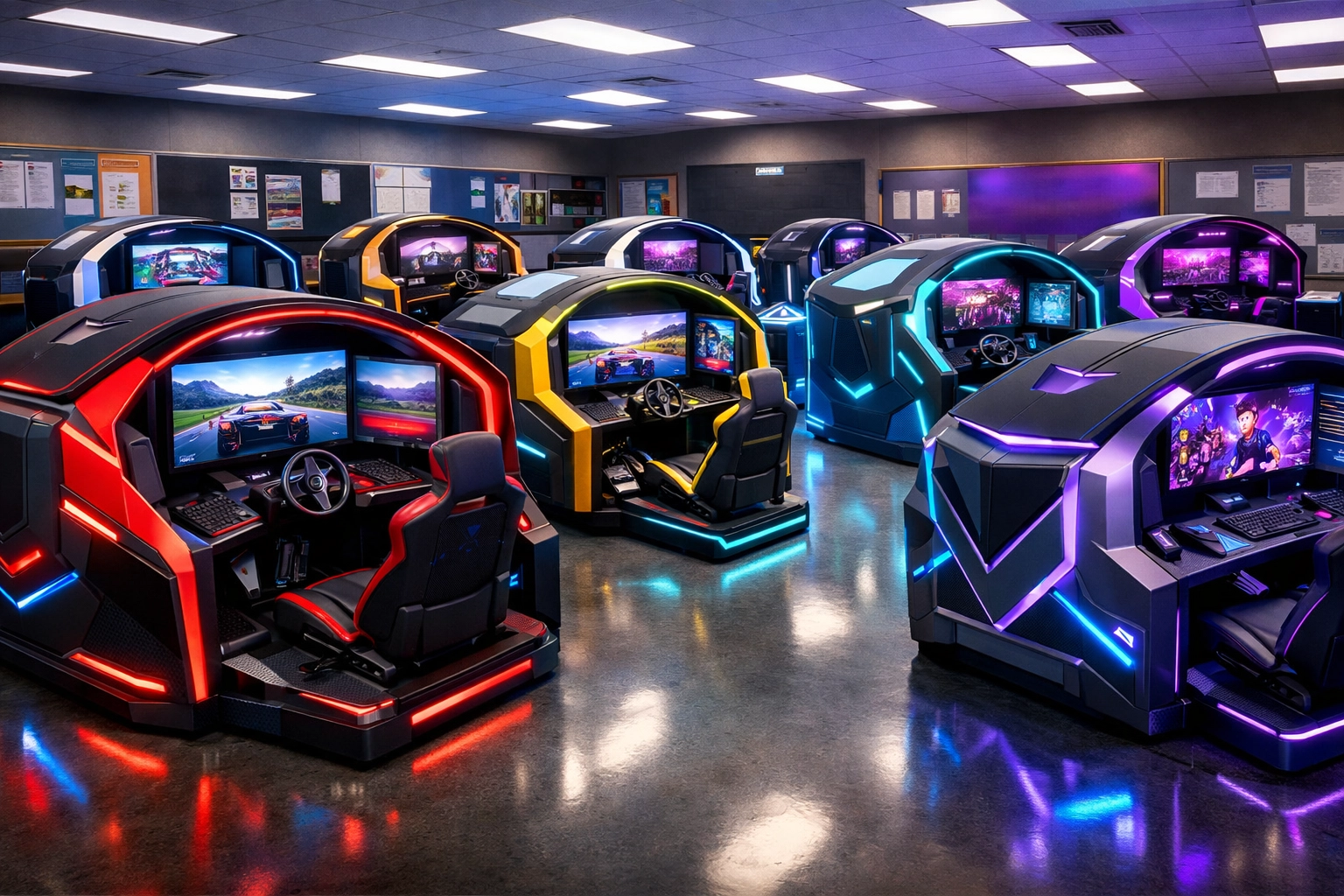
The Fix: Leverage modular, customizable infrastructure that adapts to specific school communities and programs. Military simulation programs need different configurations than competitive League of Legends teams. Career-focused STEM programs require different messaging than recreational gaming clubs.
The physical presence of branded equipment allows for hyperlocal customization while maintaining consistent brand standards. You get the best of both worlds: scalable deployment with community-specific relevance.
Mistake #4: Measuring the Wrong Metrics
The Problem: Focusing exclusively on impressions, reach, and engagement rates while ignoring the metrics that actually predict Gen Z brand loyalty.
Traditional advertising metrics don't capture what matters with Gen Z: authenticity perception, educational value association, and career-relevance connection. You might get millions of impressions, but if students perceive your brand as performative or disconnected from their actual goals, those impressions are worthless.
The Fix: Track meaningful engagement metrics like program completion rates, skill development milestones, and career pathway interest. When students use your branded simulation equipment to improve their technical skills, learn about cloud infrastructure, or explore AI applications, you're creating lasting brand associations that extend far beyond awareness.
Physical sponsorship infrastructure provides concrete usage data: hours logged, skills developed, programs completed. This gives media planners actual ROI stories to tell, not just vanity metrics.
Mistake #5: Overlooking the Educator and Parent Influencer Layer
The Problem: Focusing sponsorship strategy solely on student engagement while ignoring the decision-makers and influencers who shape Gen Z's educational environment.
Gen Z doesn't exist in a vacuum. Teachers, coaches, administrators, and parents significantly influence how students perceive brands: especially in educational contexts. If educators view your sponsorship as genuine investment in student futures, that credibility transfers powerfully to students.
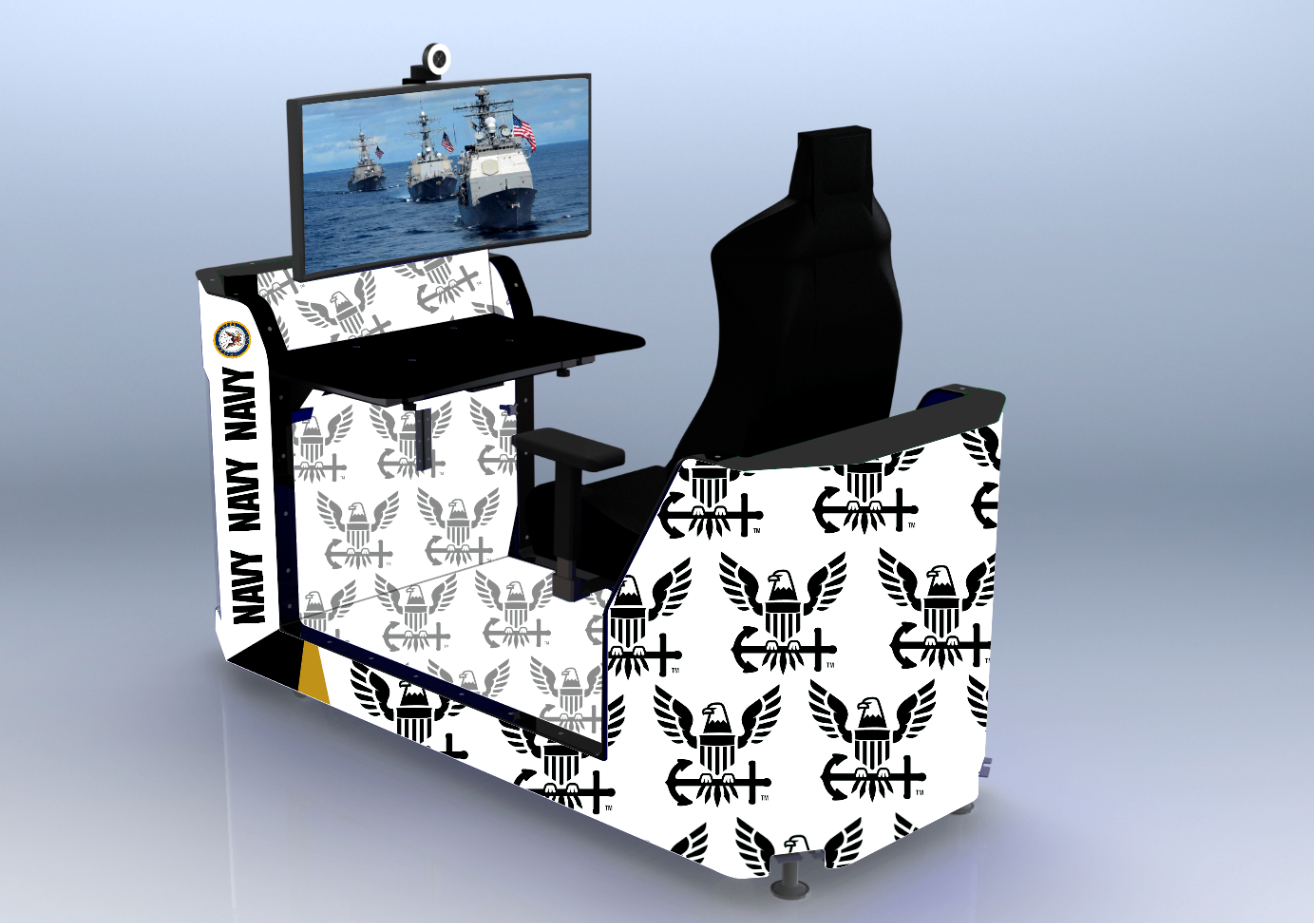
The Fix: Structure sponsorships that deliver measurable value to educators, not just students. Provide professional development resources about cloud computing, AI literacy, and simulation technology. Give teachers the tools to integrate your sponsored equipment into actual curriculum.
When administrators can point to your branded simulation pods as evidence of cutting-edge career preparation, your sponsorship transcends marketing and becomes educational infrastructure. That's a fundamentally different: and more valuable: position in the school ecosystem.
Mistake #6: Treating Esports Like Traditional Sports Sponsorship
The Problem: Applying traditional sports marketing playbooks to esports and simulation technology without recognizing the fundamental differences.
Traditional sports sponsorship is largely about event visibility and brand association. Esports and simulation technology offer something far more valuable: direct engagement with the technology stack itself. Students aren't just watching your brand; they're using your technology to develop professional skills.
The Fix: Emphasize the infrastructure story, not just the competition story. Your branded simulation pods aren't just places to play games: they're environments where students learn about:
- Cloud-based rendering and game streaming technology
- AI-assisted performance analysis and coaching tools
- Network architecture and latency optimization
- Data analytics and competitive intelligence platforms
This shifts your narrative from "we sponsor gaming" to "we power the technology infrastructure that prepares students for careers in cloud computing, AI, and digital transformation."
Mistake #7: Ignoring Long-Term Brand Building for Short-Term Activation Wins
The Problem: Prioritizing one-off events, seasonal campaigns, and temporary activations over permanent infrastructure that builds brand equity over years.
Gen Z values authenticity and consistency. Brands that show up for a tournament then disappear send the message that their commitment is superficial. Meanwhile, permanent branded infrastructure that students interact with daily for years creates deep, genuine brand associations.

The Fix: Invest in multi-year infrastructure partnerships that create sustained presence throughout students' high school experience. When a freshman walks into school and sees your branded simulation pods, then uses that same equipment for four years while developing technical skills and exploring career pathways, your brand becomes inextricably linked with their personal growth story.
This approach requires patience, but the ROI fundamentally differs from traditional advertising. You're not buying attention: you're building lasting brand equity with an entire generation as they develop career-relevant skills.
The Bottom Line for Media Planners
Gen Z tech sponsorships require a fundamentally different approach than previous generations. The brands winning this space understand that:
- Physical infrastructure matters in an increasingly digital world
- Educational value trumps entertainment value for sustained brand building
- Cloud/AI literacy represents massive white space for tech brand positioning
- Customization and authenticity beat scale and reach
- Multi-year commitments outperform quarterly campaigns
The opportunity is massive. Gen Z represents the first generation to grow up with cloud computing, AI tools, and digital simulation as foundational career skills: not novelties. Brands that position themselves as essential infrastructure for developing these skills will own decades of brand loyalty.
The question isn't whether to invest in Gen Z tech sponsorships. It's whether you'll make the same mistakes everyone else is making, or whether you'll build something genuinely different.
Want to talk about what this looks like in practice? Check out how brands are using physical infrastructure to build lasting connections with the next generation of tech professionals.
Ready to stop making these mistakes? Let's build something better together.
: Dan
P.S. : The brands getting this right aren't treating this as traditional advertising spend. They're treating it as long-term infrastructure investment that pays dividends for years. That mindset shift changes everything.