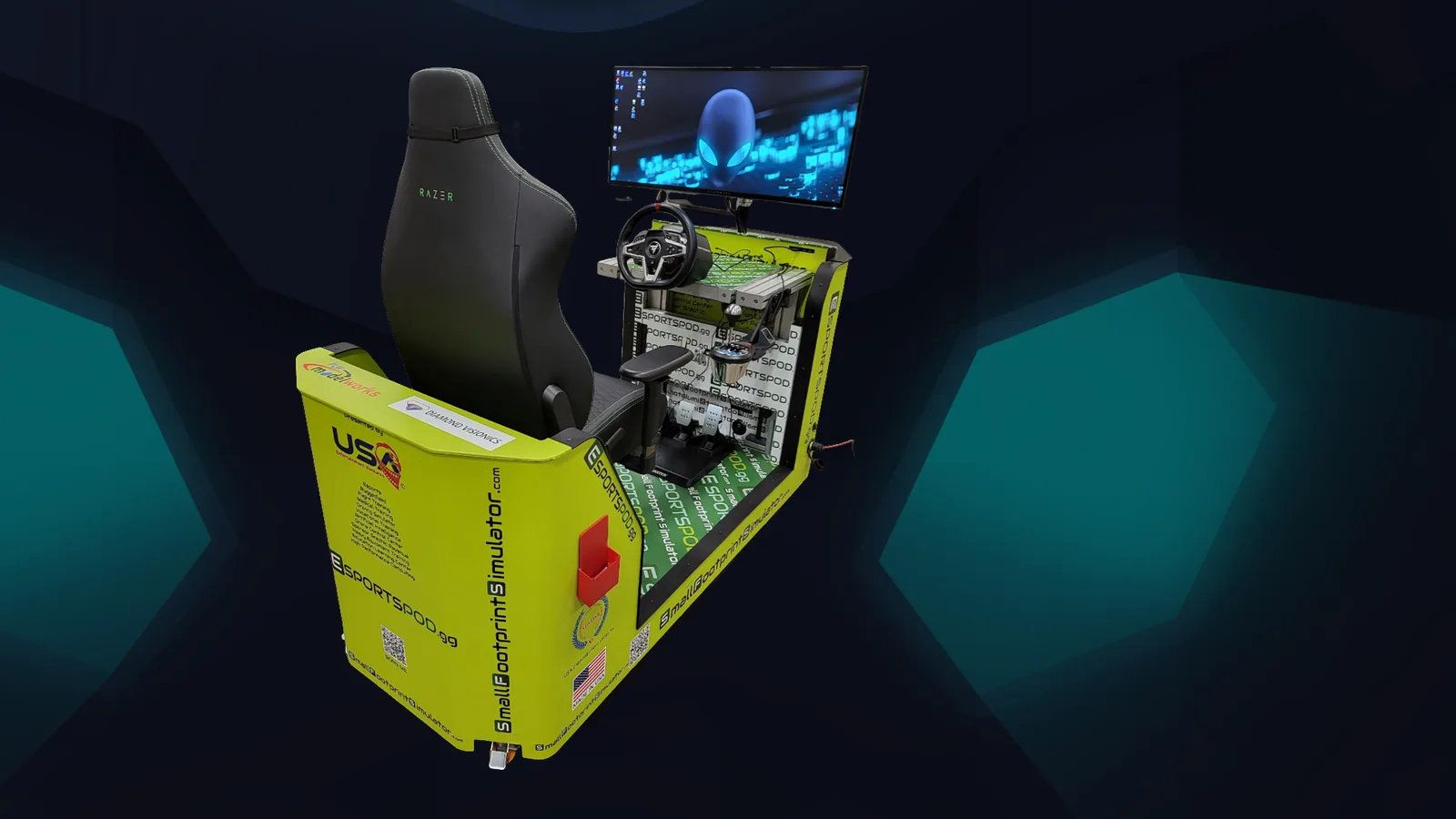
An Esport Pod is a mobile single-seat gaming station that rolls on wheels, fits through standard doors and runs on a standard 110V outlet, while a traditional esports lab is a fixed room built around desks, wiring and dedicated space. Pods suit schools that want flexibility and a fast start. A lab suits programs with a permanent room, a build budget and a clear plan for it.
Key takeaways
- Pods move between rooms, labs stay where they were built.
- Each Esport Pod by Sports Media, Inc. ships with identical hardware, so every seat is the same.
- A lab can seat more people in one room but usually needs electrical and network planning.
- Pods include simulator controls and optional VR that many labs don't offer by default.
- The right answer depends on your space, staff and goals, not on a brochure.
What is a traditional esports lab?
It's a dedicated room with rows of gaming PCs, monitors, chairs and a network, often with a stage or screen at the front. Schools and colleges build them out of a classroom, a computer lab or a converted space.
Labs have a real advantage: they feel like a place. Teams meet there, spectators gather there, and the room becomes part of campus identity. That's worth something.
What is an Esport Pod, and how is it different?
It's a self-contained station: Alienware gaming PC, 38-inch curved Alienware monitor (3840x1600, 144 Hz, 1 ms), Razer Enki chair, Razer Kraken V3 headset, Razer Kiyo camera, built-in Wi-Fi and a Thrustmaster T248 RS GT wheel, pedals and shifter or flight controls. VR through the HTC Vive Pro Eye is optional.
The key difference is that the station comes as one unit and moves. A projector slot mirrors the screen to a classroom wall, so the same pod can serve a competition one day and a class demo the next. Full details are on the products page.
How do pods and labs compare on space and setup?
| Factor | Esport Pod | Traditional lab |
|---|---|---|
| Location | Rolls between rooms | Fixed room |
| Power | Standard 110V outlet | Depends on room circuits |
| Access | Fits standard doors and elevators | Equipment installed in place |
| Hardware | Identical across pods | Varies by build |
| Seating density | One seat per pod, small footprint | Often more seats per room |
| Simulators | Wheel and flight controls included | Usually an add-on |
A lab wins on density if you have a big room. Pods win when space is shared or when your building is older and the electrical situation is uncertain.
When should a school choose a lab instead?
If you have a dedicated room, a facilities team on board and a program already large enough to fill it, a lab can be the right call. Some institutions also want a permanent venue with a stage and seating for events.
It's also fine to do both. A pod deployment can complement a lab by moving to the library, the gym or a CTE classroom for events and demos.
What about cost and maintenance?
Pods are priced as deployments: $300,000 for 10, $600,000 for 20, $900,000 for 30, around $30,000 per pod, with installation, training and sponsorship support included. We aren't going to quote a lab cost because lab builds vary wildly by room and spec.
Ask for a total for each option: hardware, furniture, electrical, network, installation, support and replacement. Compare totals, not line items. For sponsors involved in either option, see the sponsorship details.
How do you decide?
Start with three questions: do you have a room you can dedicate for years, do you need the equipment to serve more than one purpose, and how sure are you about program size? Uncertain answers lean toward pods. Firm answers about a permanent room lean toward a lab.
Visit a working program of each type if you can, and talk to the staff who run them day to day. They'll tell you what the brochure won't, such as how often a room gets double-booked.
Frequently asked questions
Can pods and a lab work together?
Yes. Many programs have a home room and still want equipment that travels. Pods can supplement a lab for events, demos and satellite spaces, and the identical hardware keeps competitive seats consistent across locations.
Do pods need special electrical work?
Each pod runs on a standard 110V outlet, so most rooms can host them without new wiring. Still, ten stations draw real power together, so have facilities check circuit capacity before delivery rather than discovering it on the first day.
Are pods good for more than competitive gaming?
They support racing and flight simulation with the Thrustmaster controls, optional VR, and a projector slot for classroom use. That makes them useful for CTE, STEM and simulation coursework alongside competitive play, depending on how your program is designed.
Which option is easier to expand?
Pods expand in deployments of 10, 20 or 30, and can be added without rebuilding a room. Labs expand until the room is full, then need another space or renovation. Plan for growth either way.
If you want to see how a pod fits your space, book a demo and we'll walk through it.