

The war for talent isn't starting on college campuses or at career fairs anymore. It's starting in high school hallways, computer labs, and competitive gaming arenas: and the companies that recognize this shift early are building pipelines that will define their workforce for the next two decades.
Fortune 5000 companies face a critical challenge: the skills gap between what universities produce and what modern enterprises actually need is widening. Cloud architecture, AI literacy, real-time analytics, collaborative problem-solving under pressure: these aren't supplemental skills anymore. They're baseline requirements. And waiting until year three of a traditional four-year degree to start cultivating them is costing companies millions in onboarding, retraining, and lost productivity.
The solution? Build the funnel earlier. Much earlier.
The High School Gaming Ecosystem Is Actually a Workforce Incubator
Here's what most executives miss: competitive gaming and simulation environments aren't leisure activities anymore. They're training grounds for the exact cognitive skills, collaborative behaviors, and technical literacy that modern organizations desperately need.
Consider what happens inside a competitive esports team:
- Real-time data analysis under performance pressure
- Cross-functional collaboration with specialized roles and clear accountability
- Iterative problem-solving where every match becomes a learning cycle
- Communication clarity in high-stakes, time-sensitive environments
- Technology fluency as a baseline, not a bonus skill
These aren't coincidental byproducts. They're the core competencies of high-performing teams in cloud operations, cybersecurity, digital marketing, logistics coordination, and product development.
The students who thrive in these environments aren't just "gamers." They're natural systems thinkers who understand feedback loops, optimization, and performance metrics. They're comfortable with failure as iteration. They expect transparency through dashboards and data. And they've already internalized the collaborative workflows that take most corporate training programs months to instill.

Why Traditional Recruitment Fails to Capture This Talent
Most Fortune 5000 recruitment strategies are reactive. Companies post job descriptions, screen résumés, conduct interviews, and hope the candidates who survive the funnel will adapt to company culture and technical requirements.
This approach has three fundamental problems:
Problem One: Late Entry
By the time a company engages with a college senior or recent graduate, that candidate has already formed expectations about work culture, compensation, and career trajectory: often influenced by consumer tech companies, startups, or consulting firms with more aggressive campus recruitment.
Problem Two: Generic Signaling
A job posting or campus recruiting event signals opportunity, but it doesn't signal investment. Students with in-demand skills are evaluating which companies are actively building the infrastructure and culture they want to work within, not just which ones are hiring.
Problem Three: Skills Misalignment
Traditional education paths: even in computer science and engineering: often emphasize theoretical knowledge over applied, real-world technical fluency. Graduates may understand algorithms but struggle with cloud deployment. They may know Python but lack experience collaborating in distributed teams using modern DevOps workflows.
The talent funnel model flips this equation. Instead of waiting to recruit, Fortune 5000 companies become embedded in the development of talent: starting in high school.
The EsportsPod Model: Physical Infrastructure for Digital Workforce Development
This is where the conversation shifts from theory to execution.
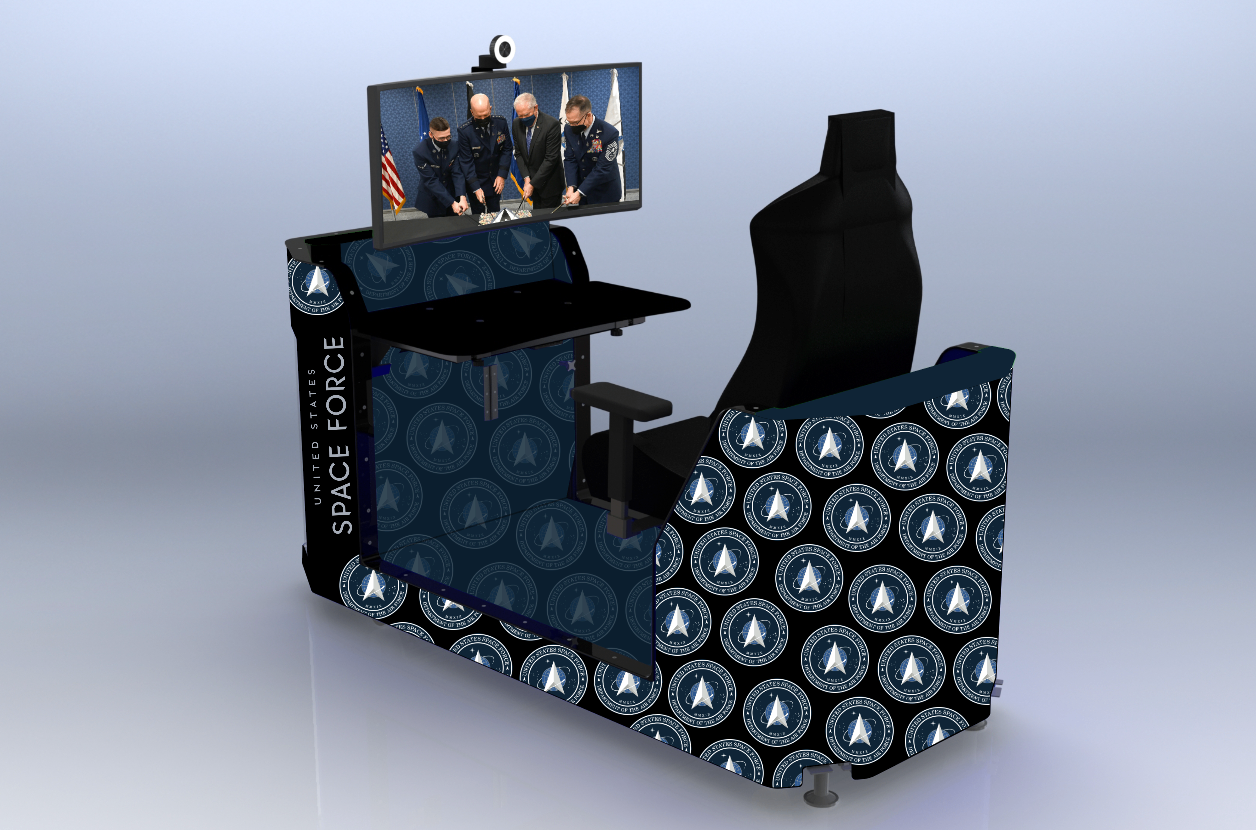
EsportsPods are purpose-built, turnkey esports and simulation stations deployed directly into high schools nationwide. These aren't makeshift computer labs or donated equipment. They're enterprise-grade learning environments designed to teach Cloud/AI literacy, collaborative teamwork, content creation, data analysis, and real-time decision-making through competitive gaming, simulation platforms, and structured curriculum.
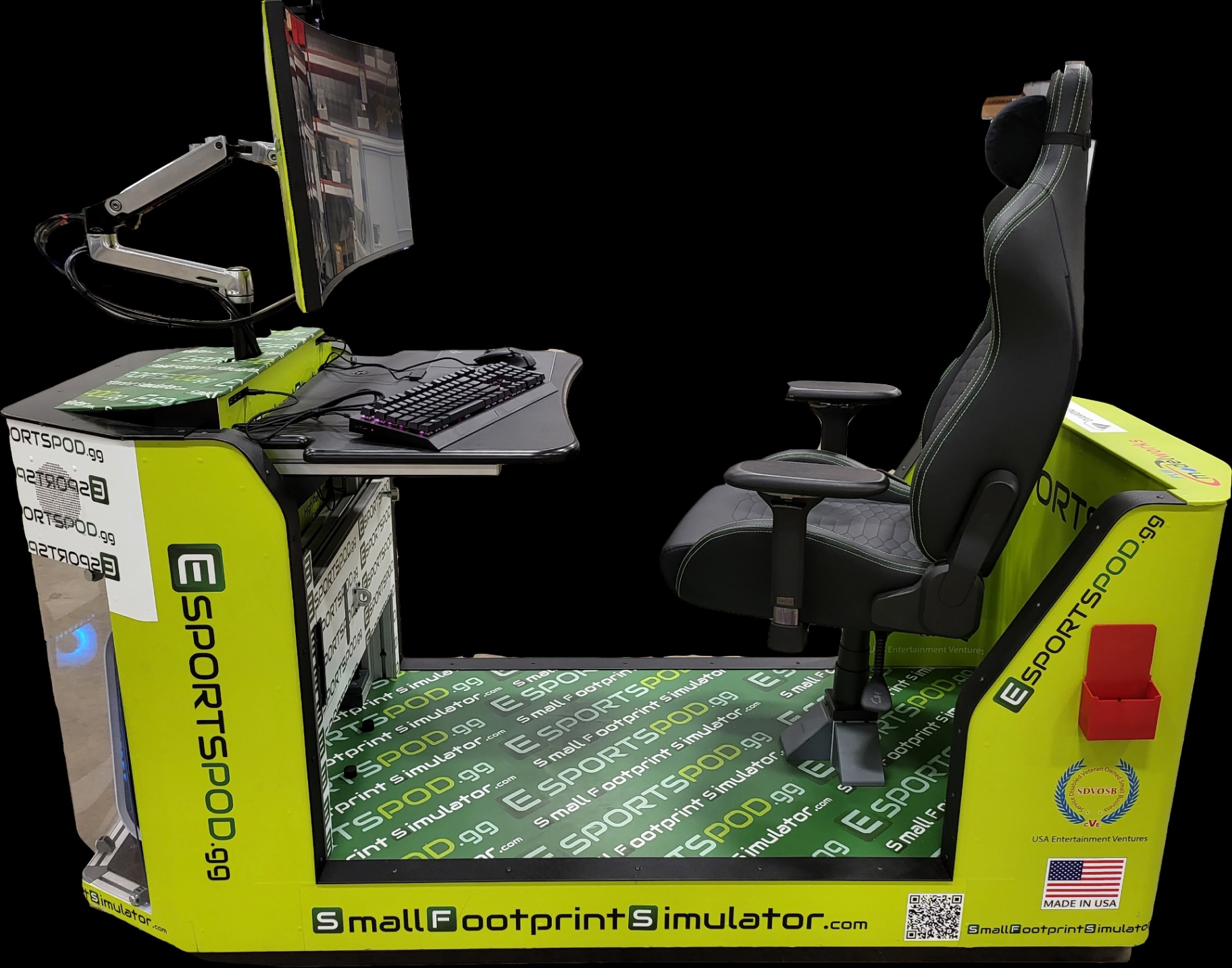
Each Pod serves as a branded, physical presence inside the school: a constant reminder to students that technology careers aren't abstract or distant. They're tangible, accessible, and directly connected to the companies whose logos are on the equipment they use every day.
For Fortune 5000 companies, this creates something traditional recruitment can't: early brand association with career opportunity, technical education, and workforce readiness.
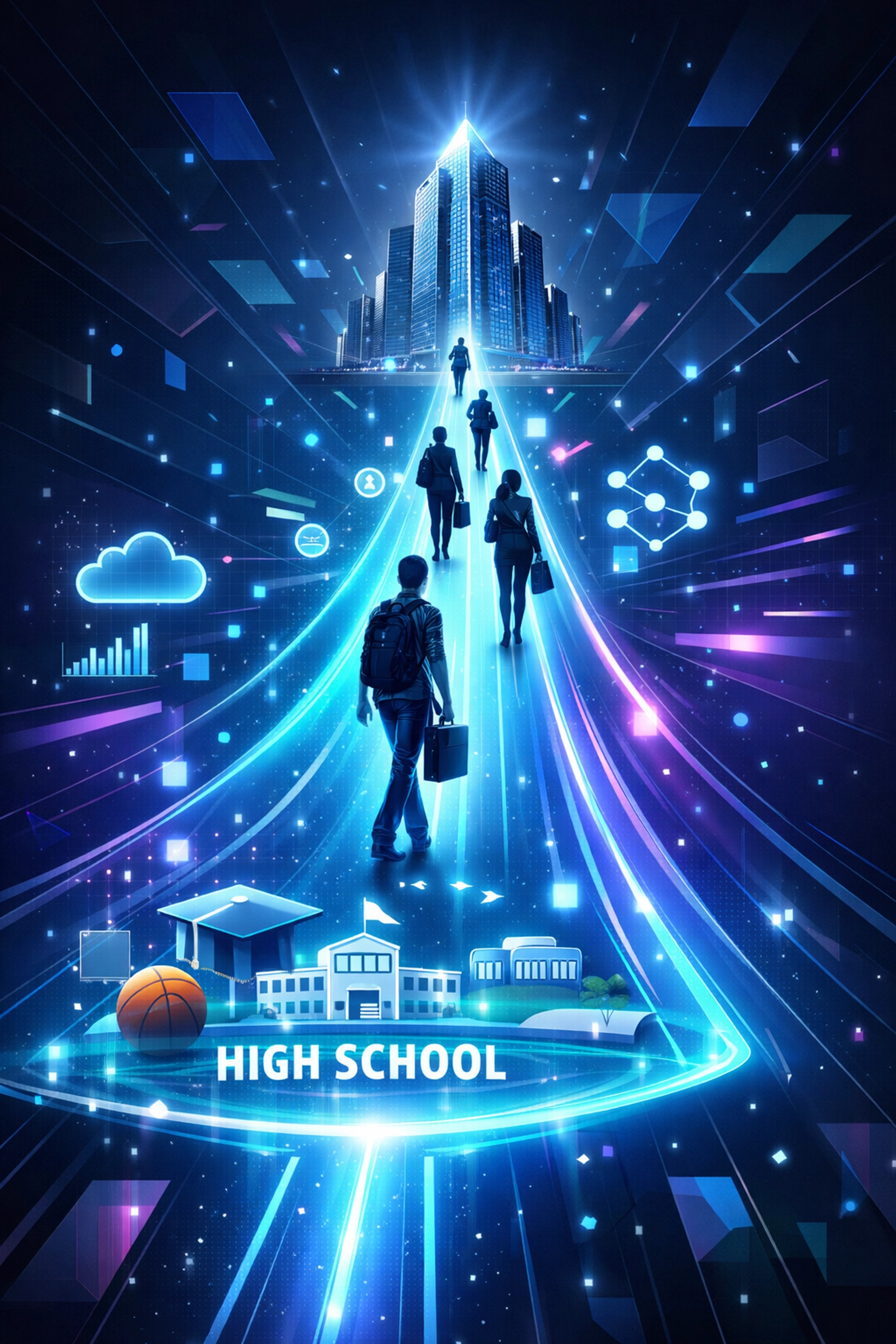
Here's what the funnel looks like in practice:
Awareness (Freshman/Sophomore Year)
Students encounter the EsportsPod infrastructure as part of their school experience. They see Fortune 5000 branding integrated into the learning environment, not as advertising but as facilitation. The message is clear: these companies are investing in their education and future.
Engagement (Sophomore/Junior Year)
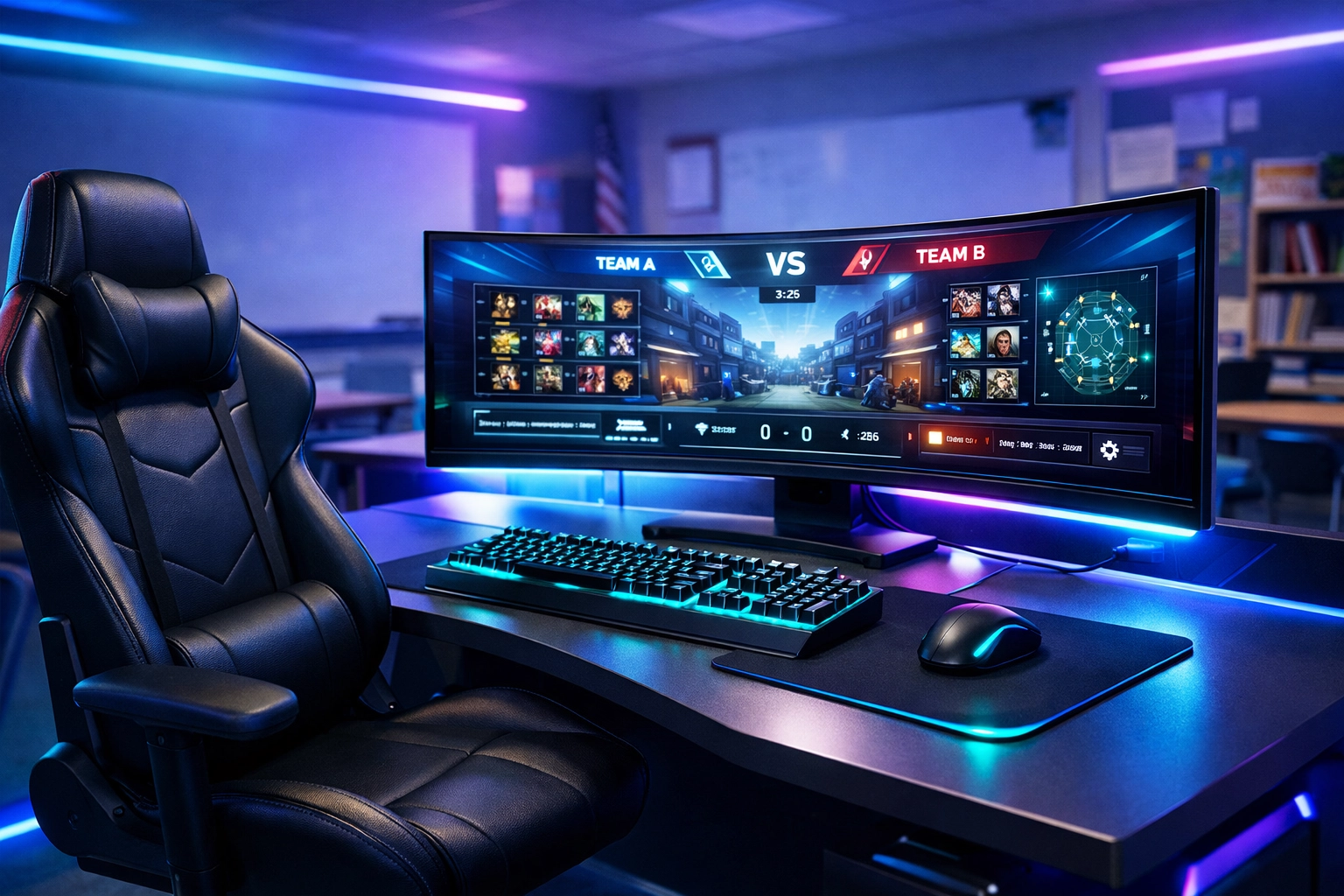
Students participate in structured esports competitions, simulation challenges, and project-based learning that require them to develop real skills: video production, event logistics, cloud-based collaboration tools, analytics dashboards, marketing campaign design. They're not passively learning theory. They're applying it in high-stakes, team-based scenarios.
Development (Junior/Senior Year)
Top performers are identified through measurable outcomes: tournament results, content creation portfolios, leadership in team settings, technical certifications earned through the program. These students begin receiving direct mentorship, internship opportunities, and scholarship pathways tied to sponsor companies.
Recruitment (Senior Year/Post-Graduation)
By the time these students are making career decisions, they've already spent 2–4 years in an ecosystem branded and supported by your company. They've used your cloud platforms. They've seen your career pathways. They've met your team members. You're not competing for their attention: you've already earned it.
What Skills Are Actually Being Developed?
This isn't a "find the gamer kids and hope they like coding" strategy. The curriculum and infrastructure are designed to cultivate specific, high-demand competencies:
Cloud and AI Literacy
Students interact with cloud-based platforms for collaboration, content storage, analytics, and deployment. They learn infrastructure concepts: not through textbooks, but through applied use cases that mirror real enterprise environments.
Content Creation and Digital Marketing
Esports ecosystems require constant content production: match highlights, promotional graphics, social media campaigns, live event coverage. Students develop video editing, graphic design, copywriting, and audience engagement skills that translate directly to marketing, brand, and media roles.
Data Analysis and Performance Optimization
Competitive gaming is a data-rich environment. Students learn to read performance dashboards, identify optimization opportunities, run A/B tests on strategies, and make decisions based on quantitative feedback. These are the same analytical workflows used in business intelligence, product management, and operations.
Collaborative Leadership and Communication
Esports teams operate with defined roles, accountability structures, and communication protocols. Students learn to lead under pressure, give and receive feedback, coordinate across functions, and manage conflict: skills that are notoriously difficult to teach in traditional classroom settings.
Technical Troubleshooting and IT Fluency
When hardware fails, software glitches, or network issues arise, students learn to diagnose and resolve problems in real time. This hands-on technical fluency is invaluable in IT support, systems administration, and technical account management roles.
The ROI for Fortune 5000 Sponsors: Beyond Brand Awareness
Let's talk economics. A national EsportsPod sponsorship represents an investment in infrastructure, education, and long-term workforce development. What's the return?
Reduced Recruitment Costs
When you're engaging talent at age 15 instead of 22, you're compressing the recruitment cycle and reducing dependency on expensive campus recruiting, headhunter fees, and competitive bidding wars for scarce talent.
Higher Retention Rates
Employees who enter your organization with 2–4 years of familiarity with your brand, tools, and culture are far more likely to stay. They've self-selected into your ecosystem. They know what to expect.
Cultural Alignment from Day One
You're not trying to teach collaboration, accountability, and data-driven decision-making to new hires. They've already internalized these behaviors through years of participation in structured, competitive environments.
Pipeline Predictability
Instead of scrambling to fill roles reactively, you have visibility into a pipeline of emerging talent years in advance. You can forecast workforce needs, plan mentorship and internship programs, and allocate scholarship funding with precision.
Brand Positioning as Workforce Leader
In an era where corporate social responsibility and workforce investment matter to consumers, employees, and investors, being the company that builds the talent pipeline: not just recruits from it: is a differentiated market position.
How to Implement a Talent Funnel Strategy in 2026
For executives evaluating this model, here's the implementation roadmap:
Phase One: Pilot Deployment (6–12 Months)
Partner with EsportsPod to deploy infrastructure in 10–20 high schools in target markets. Integrate brand presence, fund curriculum development, and assign internal mentors to engage with top-performing students.
Phase Two: Curriculum Integration (12–18 Months)
Work with educators to align esports and simulation activities with career pathway development. Introduce internship programs, sponsor certification courses (e.g., AWS Cloud Practitioner, Google Analytics), and create scholarship opportunities tied to performance and participation.
Phase Three: National Scaling (18–36 Months)
Expand to 100+ schools nationwide. Establish formal pipelines from high school participation to internships, apprenticeships, and full-time roles. Build internal recruiting infrastructure to track and engage students throughout their education journey.
Phase Four: Ecosystem Leadership (36+ Months)
Position your company as the category leader in talent funnel innovation. Publish case studies, host national tournaments, and build partnerships with universities to create seamless pathways from high school through higher education into your workforce.
The Competitive Advantage Is Timing
Here's the reality: this model works because most companies aren't doing it yet. The Fortune 5000 organizations that move first will dominate the talent pipeline for a generation. The ones that wait will spend the next decade competing for the scraps left over after early movers have locked in brand loyalty, workforce alignment, and cultural fit with the most capable emerging talent.
The students in high school today will be mid-career professionals by 2035. The question isn't whether they'll have the skills your company needs: it's whether they'll have learned those skills in an environment where your brand was present, supportive, and invested in their success.
This is infrastructure strategy. This is workforce planning. This is how you win the talent war before your competitors even realize it's started.
Ready to build your talent funnel? Explore EsportsPod partnership opportunities and discover how Fortune 5000 companies are turning high school esports programs into the most valuable recruitment asset they've ever built.