

Your talent acquisition team is fighting over the same pool of college graduates as every other Fortune 5000 company. Meanwhile, there's a pipeline starting four years earlier that most executives haven't even considered: and it's sitting empty in thousands of high schools across America.
Here's the disconnect: while your competitors outbid each other for entry-level analysts and engineers, high school students are developing cloud infrastructure skills, leadership under pressure, content production capabilities, and team coordination: all inside competitive esports and simulation environments. The problem? There's no physical infrastructure connecting that talent development to your brand, your values, or your hiring pipeline.
That's exactly what EsportsPods solve. And if you're serious about workforce development in 2026 and beyond, this is the talent funnel you can't afford to ignore.
The Traditional Recruitment Model Is Too Late and Too Expensive
Let's be honest about what "campus recruitment" really means: you're paying premium dollars to compete for talent that's already been shaped by four years of university culture, loaded with student debt, and courted by a dozen other companies offering the same benefits package.
By the time a graduate walks across the stage, their technical skills are defined, their work preferences are set, and their expectations are priced in. You're not developing talent at that point: you're outbidding competitors for finished products.
The cost structure is unsustainable:
- Average cost-per-hire for entry-level positions now exceeds $4,000
- Time-to-productivity for new college graduates averages 6–8 months
- First-year attrition rates hover near 30% as expectations misalign with reality
- Brand loyalty is minimal because the relationship started at the finish line, not the starting blocks
Now contrast that with a talent funnel that begins in sophomore or junior year of high school. Students who encounter your brand as a sponsor of their school's esports lab don't just see a logo: they associate your company with skill development, opportunity, and real-world application. By the time they're college seniors, they've had four years of positive brand association, technical skill-building in your sponsored environment, and direct exposure to the industries your company operates in.
What EsportsPods Actually Are (And Why They're Infrastructure, Not Marketing)
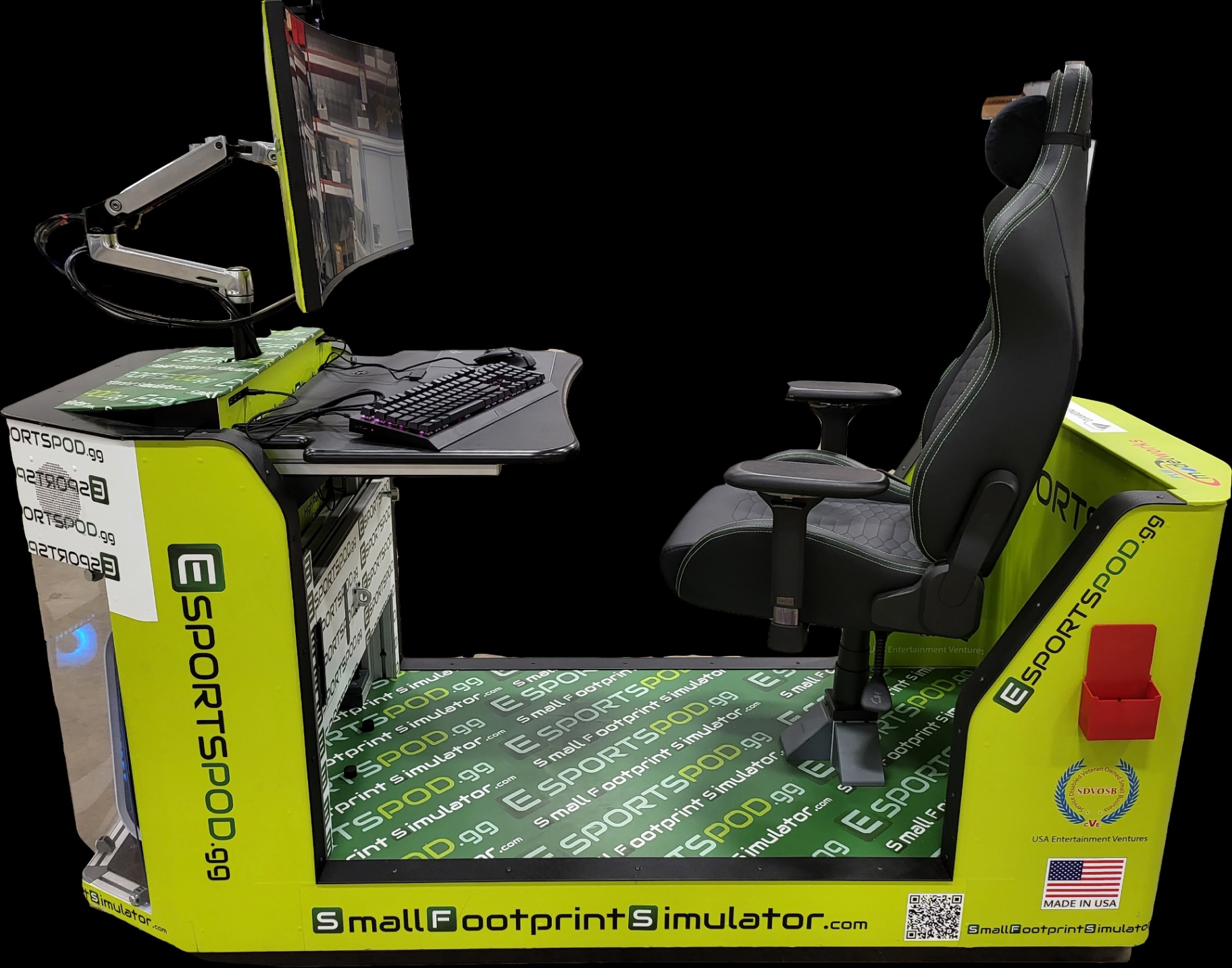
An EsportsPod isn't a "gaming station." It's a modular, branded learning lab designed to deliver technical training, competitive simulation, and career-pathway education at scale inside high schools.
Each Pod is a self-contained unit featuring:
- High-performance computing hardware for cloud-based applications, esports titles, and simulation software
- Ergonomic, professional-grade seating and peripherals that mirror real workplace setups
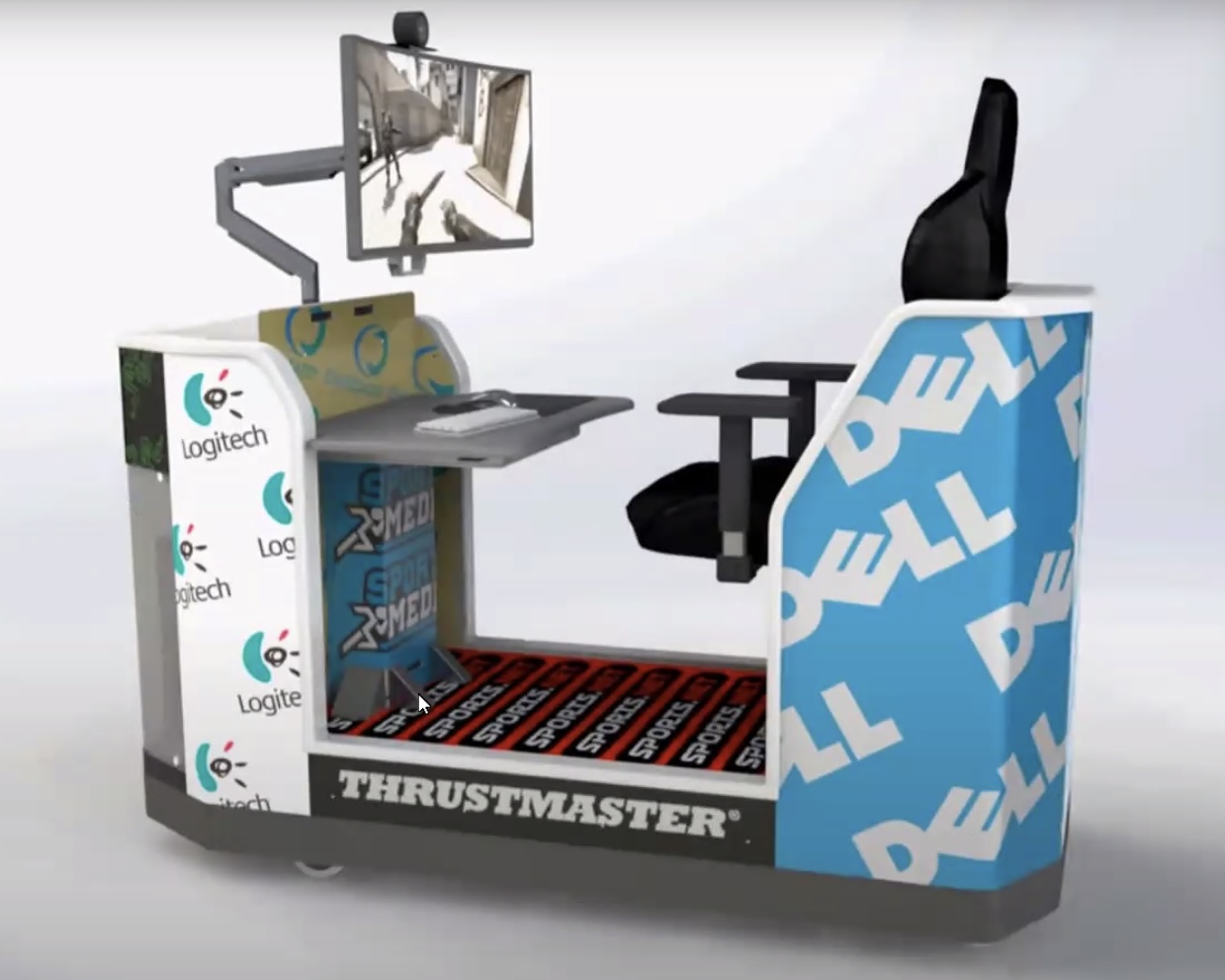
- Integrated branding opportunities that position your company as the enabler of skill development
- Curriculum-aligned content that connects gameplay to career skills (analytics, communication, logistics, media production, IT infrastructure)
The critical distinction here is physical presence in the classroom. This isn't a scholarship program students apply for. It isn't a webinar series they may or may not attend. It's infrastructure they walk past, sit in, and use daily: which means your brand becomes synonymous with "future-ready education" in their minds.
And because Pods are standardized and scalable, you're not managing one-off sponsorships with inconsistent outcomes. You're deploying a repeatable system across dozens or hundreds of schools with measurable utilization, engagement, and skill-development metrics.
The Skills Gap You're Already Feeling? Esports and Simulation Are Closing It
Here's what Fortune 5000 talent acquisition leaders are telling us they need more of:
- Collaborative problem-solving under time constraints
- Data-informed decision-making with incomplete information
- Communication clarity in high-stakes, fast-moving environments
- Adaptability to shifting tools, platforms, and team structures
- Content creation and digital literacy across media formats
Guess what develops all five of those capabilities simultaneously? Competitive esports and simulation environments.
When a high school student is competing in a League of Legends tournament through their school's EsportsPod-sponsored lab, they're not "just gaming." They're:
- Analyzing live data (kills, deaths, assists, objectives, gold differential) to adjust strategy mid-match
- Communicating role assignments and tactical adjustments under pressure with a 5-person team
- Managing failure, tilt, and performance recovery in real time
- Creating post-match content (highlight reels, strategy breakdowns, social media updates) for their school's esports brand
- Learning IT fundamentals (network optimization, hardware troubleshooting, software updates) as part of lab management
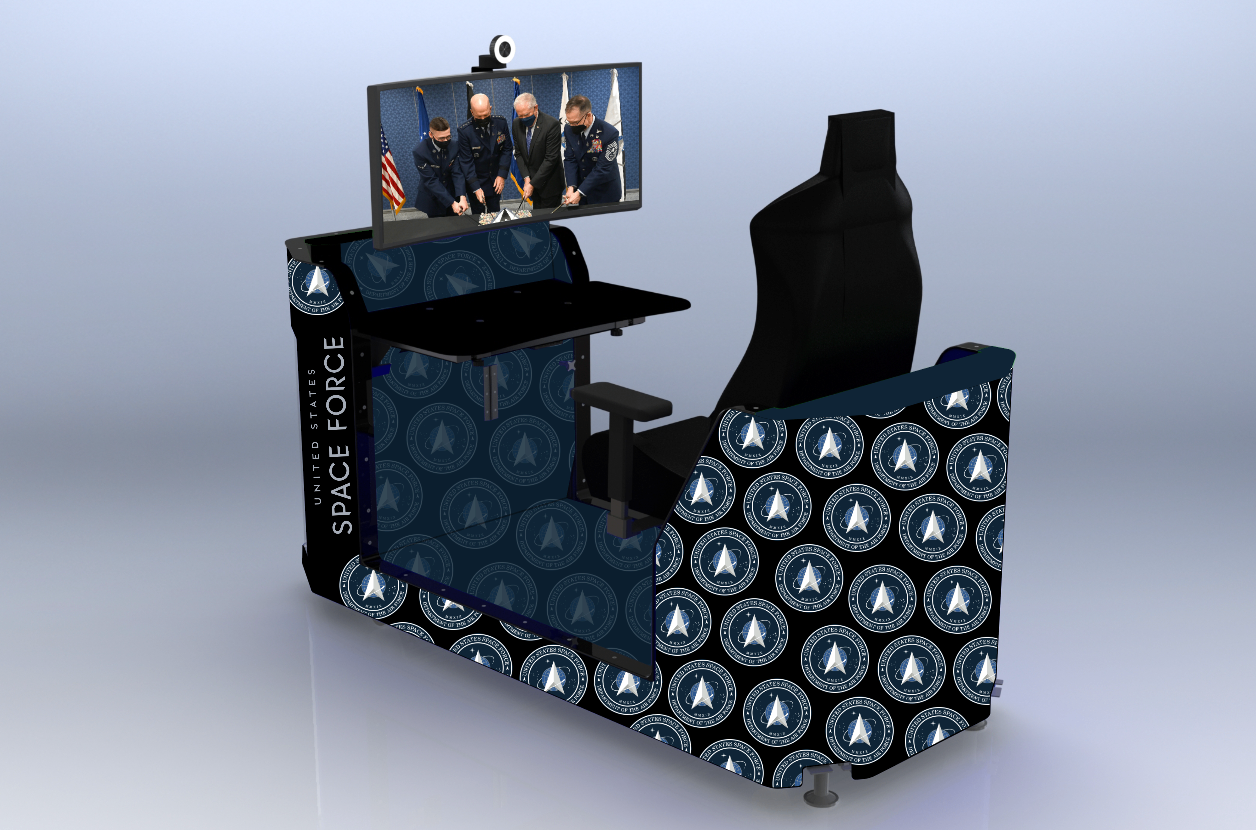
Now layer in simulation titles: flight simulators, logistics management games, business strategy platforms: and you're building direct career pathways into supply chain, operations, aerospace, defense, and beyond. Programs like the Air Force and Space Force are already using branded Pods to pipeline students into technical career tracks, because they recognize what most civilian companies are still missing: esports infrastructure is workforce development infrastructure.
Why Sponsorship at the High School Level Is a Strategic Moat, Not a Marketing Expense
Traditional advertising gives you impressions. Event sponsorships give you awareness. Campus recruitment gives you access to finished talent.
High school esports infrastructure gives you all three: plus a four-year relationship with students before your competitors even know their names.
When your company sponsors an EsportsPod lab in a high school, here's what you're actually buying:
Brand Trust in a Trusted Environment
You're not interrupting a student's day with an ad. You're embedded in their learning. That's a fundamentally different relationship: one built on enablement, not extraction.
Goodwill That Compounds Over Years
A sophomore who uses your branded Pod for four years doesn't just remember your logo. They remember that your company made their school esports team possible. That emotional association drives application rates, reduces recruitment friction, and increases long-term retention.
Talent Visibility Before the Market Prices Them In
You're not waiting until graduation to discover top performers. You're watching them develop in real time through lab usage data, tournament performance, content creation output, and leadership roles. By the time they're juniors in college, you already know who the standouts are.
Cultural Alignment From Day One
Students who grow up in your sponsored environment understand your company values, your industry focus, and your expectations before they ever apply. That reduces onboarding time, increases job satisfaction, and lowers attrition.
Category Leadership in Workforce Development
When competitors finally realize high school esports is a talent pipeline, you'll already own the category. First-mover advantage in infrastructure is nearly impossible to displace.
The ROI Model: Workforce Pipeline Economics vs. Traditional Recruitment
Let's run a simplified comparison.
Traditional Model (Campus Recruitment Focus):
- $4,000 cost-per-hire × 100 entry-level hires = $400,000 annually
- 30% first-year attrition = 30 replacement hires needed
- $4,000 × 30 = $120,000 in additional recruitment costs
- Total annual cost: $520,000 for 100 net new hires
EsportsPod Workforce Pipeline Model:
- Sponsor 50 high school EsportsPod labs at $10,000/year each = $500,000 annually
- Each lab serves ~100 students/year = 5,000 students in your branded talent funnel
- 2% conversion to internship/entry-level roles = 100 hires
- Reduced cost-per-hire (pre-qualified, brand-aligned candidates): $1,500 average
- $1,500 × 100 = $150,000 in direct recruitment costs
- 15% first-year attrition (half the industry average due to cultural fit) = 15 replacement hires
- $1,500 × 15 = $22,500 in replacement costs
- Total annual cost: $672,500 for 100 net new hires + 4,900 students in ongoing brand pipeline
The second model costs more upfront: but it builds a proprietary talent pipeline that your competitors can't access. And every year, that pipeline deepens. By year three, you're not just hiring from 5,000 students: you're hiring from 15,000, with multi-year brand relationships and measurable skill development tracked through Pod utilization.
That's a strategic moat, not a line item.
What Fortune 5000 Companies Should Do Next
If you're reading this and thinking, "We need to be in high schools before our competitors figure this out," you're correct. The window for first-mover advantage in esports-based workforce development is open right now: but it won't stay open forever.
Here's how to move quickly:
-
Identify Target Geographies: Where are your future hires? Focus Pod deployments in regions with strong STEM schools, diverse student populations, and proximity to your offices or campuses.
-
Define Your Curriculum Alignment: What skills do your entry-level roles require? Partner with schools to align Pod usage with coursework in business, IT, media production, logistics, or engineering.
-
Build Measurable Outcomes: Track lab utilization, student engagement, internship applications from Pod schools, and post-hire performance. This is infrastructure: treat it like any other workforce development investment with clear KPIs.
-
Launch a Pilot Program: Start with 10–20 Pods. Test messaging, refine curriculum partnerships, and measure early conversion metrics before scaling to hundreds of schools.
-
Own the Narrative: When you deploy Pods, tell the story. Students, parents, school boards, and media should all know that your company is investing in the next generation's career readiness: not because it's trendy, but because it's strategic.
The companies that understand this shift aren't waiting for universities to produce talent. They're building the pipeline themselves, starting in high school, using esports and simulation as the delivery system.
The talent funnel no one's talking about? You're looking at it. The only question is whether you'll own it: or watch your competitors do it first.
Ready to explore how EsportsPods can become your company's workforce development infrastructure? Visit esportspod.gg to learn more about sponsorship opportunities, pilot programs, and the schools already building tomorrow's talent today.